Energy is about time to power, and working with the grid once you're on it. Interconnection queues, behind-the-meter generation, batteries and nuclear, then grid interactivity: flexible load, smoothing the power swings of AI training, and the transformers and switchgear that set the schedule. From the developers, utilities and energy teams bringing gigawatt campuses online.
Who it's for
VP, Energy and Power StrategyHead of Site SelectionDirector, Utility PartnershipsPower Systems EngineerHead of SustainabilityInfrastructure Investment Director
Energy track topics at Digital Infrastructure World 2027
The Energy track at Digital Infrastructure World 2027, held in collaboration with the Open Compute Project, home of OCP Tech Day. San Jose, February 3-4, 2027. Sessions are being confirmed; these are the topics on the agenda.
01 · Flexible Grid Load
Flexible grid load: AI loads the grid can live with
On 10 July 2024 a 230 kV line fault caused about 1,500 MW of data center load in the Eastern Interconnection to disconnect at once, according to NERC. Google told the 2026 OCP Global Summit it has written 1 GW of demand response into contracts with several US utilities.
Training loads can swing by tens of megawatts within a minute. Sessions cover ride-through, power smoothing in hardware and software, batteries as a buffer, demand response and flexible-load programs such as EPRI's DCFlex, and software that steers power budgets across rows and racks so the site behaves as one predictable load.
Topics include
Flexible data center load
Data center demand response
Power smoothing
Grid-interactive data centers
Software-defined power
02 · Space Data Centers
Space data centers: compute in orbit
Prototype satellites are already testing compute in orbit, pitched on unlimited solar power and free radiative cooling.
One session on whether AI data centers in space add up: launch cost per kilogram, power and heat rejection in orbit, radiation, latency back to Earth, and what has to be true for orbital compute to compete with a gigawatt campus on the ground.
Topics include
Space data centers
Orbital compute
Data centers in orbit
Launch cost per kilogram
03 · Generation & Storage
Generation and storage: on site, nuclear and batteries
If the grid cannot come to the data center, the data center brings its own power: gas on site, nuclear restarts such as Crane (835 MW, formerly Three Mile Island Unit 1), SMR agreements reaching into the 2030s, and batteries sized in hours rather than minutes.
Three topics: on-site and bridge generation (turbines, reciprocating engines and fuel cells), nuclear and SMRs, and battery storage for backup, buffering and grid services. Clean backup was set a high bar at the 2026 OCP Global Summit: under 10% of diesel CO₂ emissions and under 10 seconds to full power. Expect cost, timelines and permitting, not press-release megawatts.
Topics include
Behind-the-meter generation
Bridge power
SMRs for data centers
Battery energy storage (BESS)
Clean backup power
04 · Speed to Power
Speed to power: site selection when time is the scarcest input
For AI builders the critical date is not when the shell is finished but when the site is energized. More than 2,000 GW of generation and storage sat in US interconnection queues at the end of 2025, according to Berkeley Lab, and most of it is never built.
Sessions cover speed-to-power strategy and site selection: substation capacity, transmission headroom, firm and non-firm power, large-load tariffs, flexible connection agreements and getting through the interconnection queue. Duke University researchers estimate US grids could absorb about 76 GW of new load if it accepts curtailment 0.25% of the time.
A gigawatt campus needs a local license to operate, and water is where it is most often tested. US data centers used about 66 billion liters of water directly in 2023, according to Berkeley Lab.
Sessions cover water strategy at the watershed scale (closed-loop cooling, alternative water sources, replenishment and public reporting), and community engagement on land, noise, tax and who pays for grid upgrades.
Topics include
Data center water use
Closed-loop cooling
Water replenishment
Community engagement
Social license
06 · Capital & Development
Capital and development: funding and building 10 GW pipelines
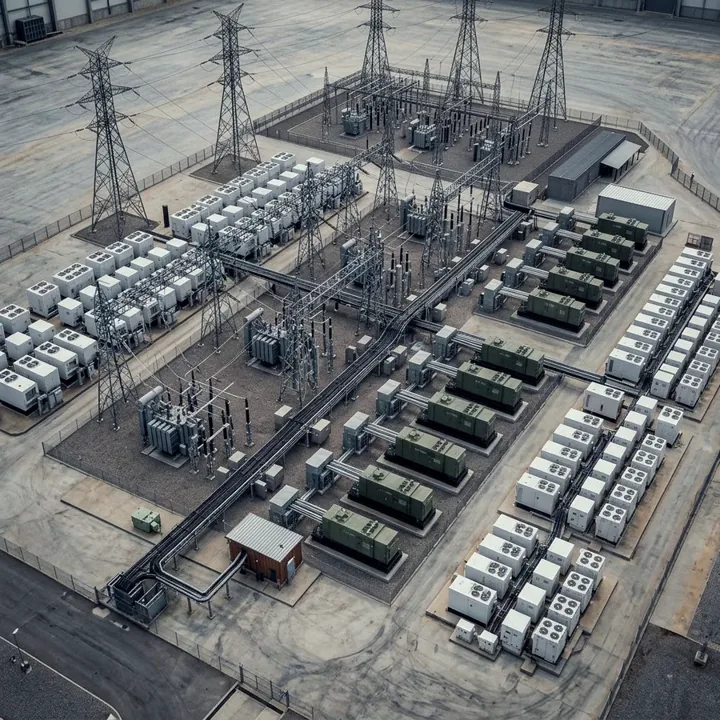
A gigawatt campus needs tens of billions of dollars before it earns one. Power transformers took about 128 weeks to deliver in 2025, according to Wood Mackenzie, so the capital has to be committed years before the hall is.
Sessions cover capital for 10 GW pipelines (project finance, joint ventures and long-term power purchase agreements), building grid pipelines a utility will take seriously, and procurement of long-lead equipment: transformers, switchgear and turbine slots.



 Astrid AtkinsonCEO and Co-FounderCamus Energy
 Ella ZhouSenior Director, Data Center TechnologiesSiemens